Saturday, 16 May 2020

More Of The Same

A weekend visit to Priors Hall where the mainly cloudy conditions didn't help very much. Nothing new to report as many insects appeared to stay hidden and very few birds were noted either. Of those birds that did show a Cuckoo was the best, if it's the same one then it must have been here for at least three weeks now. Sand Martins and Lapwings were also observed but sadly little else.

Four-spotted Chaser and Cinnabar Moth.

Half a dozen Four-spotted Chasers were flushed as I walked around the site and a single Hairy Damselfly ventured out during one of the sunnier spells. Plenty of Blue-tailed Damselflies were emerging, I always find this species to be more tolerant of clouds than others. Two other damsels were seen and they were Large Red and Azure, about six of each were found.

Grizzled Skipper and Small Heath.

Butterflies were for the most part fairly scarce though Dingy Skipper bucked the trend with around forty on the wing. Only one Grizzled was observed while Common Blue and Small Heath fared a little better with five or so of each recorded. Not much in the way of other wildlife about today either though a Common Lizard was a welcome find.

Good job he wasn't arrive for VE day!

Friday, 15 May 2020

Last Furlough Friday

Having confidently asserted to a member of a FB group that Green Hairstreaks were still about it occurred to me that I'd better check my facts rather than end up with egg on my face. Happily my visit to the area near Corby's STW did produce sightings of a couple of males. As is their aggressive habit they spent most of the time fighting with each other in little spiralling bouts of squabbling.

Green Hairstreak and Dingy Skipper.

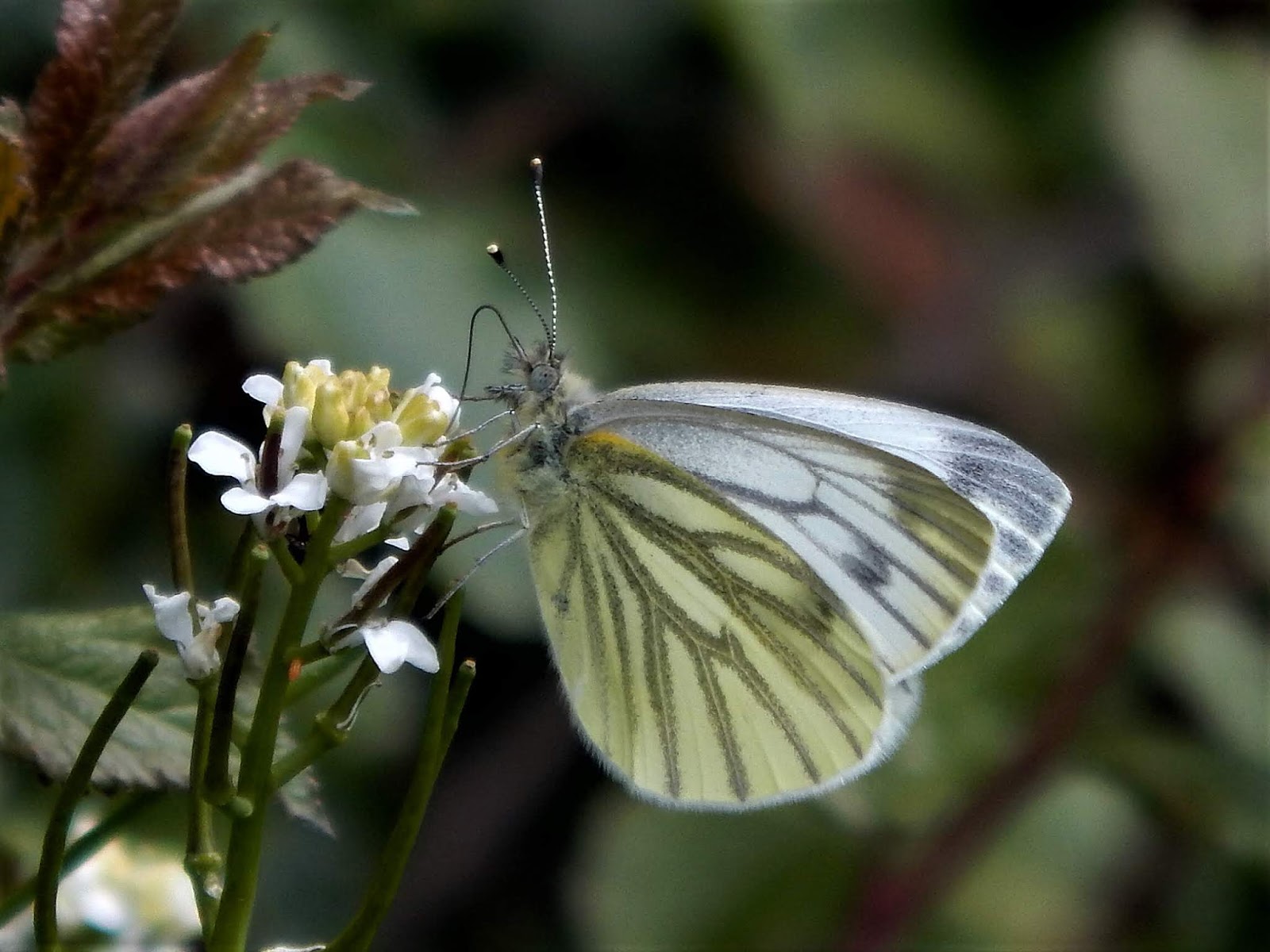
My visit produced a few more butterfly highlights not least of which was my first Dingy Skipper here this year. Other year site firsts were Common Blue and Brown Argus, the latter are really starting to increase now. A male Brimstone looked surprisingly fresh given that it's had a long life by butterfly standards. Among the other species noted were Red Admiral, Speckled Wood, Green-veined White and a female Holly Blue.

Holly and Common Blues.

Moving on from here I checked the new Dingy Skipper colony near the A43 pond at Weldon. I was rewarded with sightings of about five and also had views of my first Banded Demoiselle here. Nearby Weldon Industrial Estate had my first and only Small Heath of the day.

Variable and Large Red Damselflies.

From here it was a short walk to the stream where my search for White-legged Damselflies drew a blank. A fourth male Variable Damselfly of the Spring was the star of the show, May is the best month to see these scarce insects at this site. Numbers of Large Red Damselflies were recorded and these included a female struggling with a large (by her standards) cranefly which must have left her feeling pretty full by the time she had scoffed it. More Blue-tailed Damselflies have emerged and these included females of both the rufescens and violacea forms. The other species noted were Banded Demoiselles and Azure Damselflies. Orange-tip numbers seem to be dropping now though there were still a few around and I also managed to see another Brimstone.

Violacea (top) and rufescens form of female Blue-tailed Damselflies.

Thursday, 14 May 2020

Been to Deene

My brief career as a paid nature spotter is due to end very soon as my period of furlough is about to finish and I have to go back to earning my living. In the mean time there are still a few days of freedom left and I used today to talk a walk over to Deene.

Lapwing and Red Kite.

One or two pairs of Lapwing were seen from Bears Lane as a passing Red Kite found to its cost when it strayed too close to their territory. An Orange-tip butterfly here was my first butterfly for a day or too. Not much else until I got to Deenethorpe airfield where an impressive total of 34 Small Heaths were counted. A tired looking Small Tortoiseshell and a couple of Green-veined Whites were also observed. Further pairs of Lapwing were present, perhaps as many as three and there was also a song  flighting Meadow Pipit.
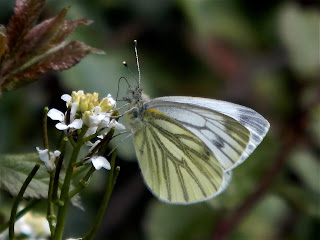
Small Heath and Green-veined White.

Nothing of any interest was seen at Deene Lake inflow though there were two pairs of Shelduck on the main lake. Also seen was a pair of Egyptian Geese with one gosling, this is the first time that I know of them breeding here. Strangely no damsels or dragons were found either here or at Deenethorpe, I really thought that there would be at least a few on view. Strolling on there was a Muntjac and Brown Hare seen from Kirby Lane and nearby I saw another eight Small Heaths as well as a glimpse of a chaser dragonfly which was too quick to identify. Two Brown Argus butterflies were also present, tiny bundles of seemingly boundless energy that didn't land while I was there. A distant Cuckoo heard from here was probably the bird from Priors Hall.

Egyptian Geese and Dabchicks.

Weldon Industrial Estate was my next port of call and I visited the pond near the old speedway. One Large Red Damselfly was found but no other odes even though the site has potential. A pair of Dabchick had a chick which stayed in close attendance with one of the parents while the other was probably elsewhere enjoying some peace! My second song flighting Meadow Pipit of the day was also seen in the area. Nearby another Brown Hare leapt up almost from under my feet before speeding off into the distance. Nearer the steelworks a small patch of grass held two more Brown Argus, two Common Blues and a Small Heath. my final sightings of the day was another Large Red Damsel and a Small White.

Brown Argus and Common Blue.

Wednesday, 13 May 2020

Another Weldon Walk

So far this week the weather has been somewhat challenging with sunny interludes of varying length and a brisk and somewhat cool breeze affecting things to quite a degree. Today followed the same pattern and I took my exercise walk down to Weldon hoping that my visit might coincide with one of the day's sunnier spells.

Male Banded Demoiselle and violacea form Blue-tailed Damselfly.

My visit was fairly brief and didn't include either interesting birds or any butterflies at all. Luckily a few damselflies were still active along the stream at both the pocket park and near the woodland park. One of these was a newly emerged male Banded Demoiselle which appeared to get stuck in amongst some goose grass. I was able to get him out of his predicament without any obvious damage and he sat on my finger tip for a few seconds before flying off. Other Banded Demoiselles managed to avoid any similar mishaps though most where sheltering out of the breeze deep within the nettles. Since my last visit there appears to have been an emergence of Blue-tailed Damselflies and these included a very fresh looking female of the violacea form. A single male Large Red Damselfly was noted though he was outnumbered by Azures.

Male Variable and Azure Damselflies.

The variation which gave Variable Damselflies their name is very useful when trying to judge the population size of small colonies like the one at Weldon. The markings on the male that I saw today differed from the previous two which means that including females at least four and probably five different Variables have been recorded so far. As only a relatively small area of the extensive nettle beds is in view from the path I can only speculate on how many of these scarce insects are present. I'm hoping that with the forecast drop in the wind strength that more damsels and dragons will appear in the next few days.

Pheasant.

Tuesday, 12 May 2020

Going to Gretton

While the weather this week has been OK for most things it's been fairly poor for the insect spotters amongst us with a brisk and cool breeze keeping things quiet. My walk around Gretton Weir this morning during the sunnier part of the day produced a few sightings but not that much.

Gretton Weir and female Demoiselle.

Banded Demoiselles are beginning to appear in the riverside vegetation more than a fortnight after the ones at Weldon, the water in the Welland must be quite a bit cooler. The only other ode on view were Large Red Damselflies as I didn't see Hairy Dragonfly which another observer had seen here at the weekend. A couple of Small Tortoiseshells and a Green-veined White were the only butterflies seen here.

Large Red and Azure Damselfly.

Gretton Pocket Park had a couple of Azure Damselflies but no other insects apart from a few white butterflies. Plenty of tadpoles were observed in the pond where a few Smooth Newts were also present. Walking from here towards Brookfield added Red Admiral and Orange-tip to the day list but nothing else of interest. The stroll through the plantation was uneventful as by this time the sun had been replaced by clouds and only Speckled Woods and more Large Red Damselflies were noted.

tadpoles and Smooth Newt.

I'm hoping that the improvement forecast in the weather is going to improve things a bit and with the slight relaxation in the government's lockdown rulings I may make it over to the Nene, those Scarce Chasers won't spot themselves!

Monday, 11 May 2020

Changeable and Variable

Yesterday was a stay at home sort of day with the weather having taken a decided turn for the worst. Today offered a slightly better prospect and it was enough to persuade me to take a stroll down to Weldon. Sunny spells tempted a few damsels out along the stream but it wasn't sunny enough for the dog walking masses so I enjoyed a pleasantly quiet walk.

Female Variable Damselfly.

My first damselfly was also the most interesting, a female Variable  which was sitting out one of the duller phases on the stem of some Cow Parsley. I was lucky enough to catch up with her again when the weather took a turn for the sunnier a little later on. Now present in growing numbers are Azure Damselflies, these are one of the commonest early species along the stream. More Banded Demoiselles are showing and these included at least one female which in my opinion are a more attractive insect than the males. Final species on today's list was a single Large Red Damselfly.

Female Banded Demoiselle and Orange-tip.

Only one butterfly was noted today and that was a male Orange-tip which was gamely clinging on to the top of some Cow Parsley during one of the breezier spells. No interesting birds were observed apart from a single Grey Wagtail in Corby Old Village.

Saturday, 9 May 2020

Resting My Weary Feet

After a few days with plenty of walking involved I thought that it might be a good idea to stay a little closer to home. I chose to wander along to Brookfield Plantation passing across the rough grassland at Cockerell Road on the way.

Brown Argus and Small Copper.

Small Heaths are now beginning to increase and five were seen on the industrial estate. Another species that is becoming commoner is Common Blue with five or six here and another in Brookfield. This is turning out to be an excellent year for Dingy Skippers, as well as seeing about five at Cockerell Road I saw one near the power station and yet another in Brookfield Plantation.  A brace of Brown Argus were my first for the year taking my year list up to eighteen. Also showing in the same area were two Small Coppers and some Small Whites as well. One other species was observed and that was a tatty looking Small Tortoiseshell sunning itself on some nettles.

Common Blue and Dingy Skipper.

Brookfield was by comparison fairly quiet though a female Broad-bodied Chaser was a welcome sighting as I tend not to see that many of them. Two Large Red Damselflies were the only other odes on view today. Best butterfly in the plantation was a Grizzled Skipper which was my first for this site though I have been looking for them on recent visits. Large White, Speckled Wood and orange-tip were the other species seen on my visit.

Small White and Broad-bodied Chaser.

Best bird was a Peregrine in its usual spot and there were also a few Swifts zooming above Stephenson's Way.

Peregrine.