Friday, 3 May 2019

Spanish Travels Part Three - Guadahorce

On my previous visits to this part of Spain this reserve on the edge of Malaga, Les Desembocaduras del Guadahorce if you want the fell name, provide some of the best birding and they did not disappoint his year either. In fact they were so good that I made two trips even if takes almost an hour to walk there from the nearest train station at Plaza Mayor.

White-headed Duck and Greater Flamingoes.

White-headed Ducks are a draw for many UK based birders and they performed as well as usual with a decent number on view. A feature of both visits was the numbers of waders passing through with Dunlins in particular being common. Quite a few Sanderlings and an adult Curlew Sandpiper were tagging along with them while I also found three Little Stints on my second visit. Ringed Plovers were causing the local Kentish Plovers some consternation and they spent a lot of time chasing them off. The Kentish showed much better than in previous visits and I got a few good shots of them. While I always enjoy watching Black-winged Stilts and Avocets they were both outshone by the star wader of my trip - a Collared Pratincole. Although I've seen them elsewhere in Spain this is the first time that I've seen one in this neck of the woods. A resting individual spent a few minutes in front of the hide in which I sat before being moved on by the ever squabbling stilts which also vanquished Redshanks and a Grey Plover.

Collared Pratincole and Kentish Plover.

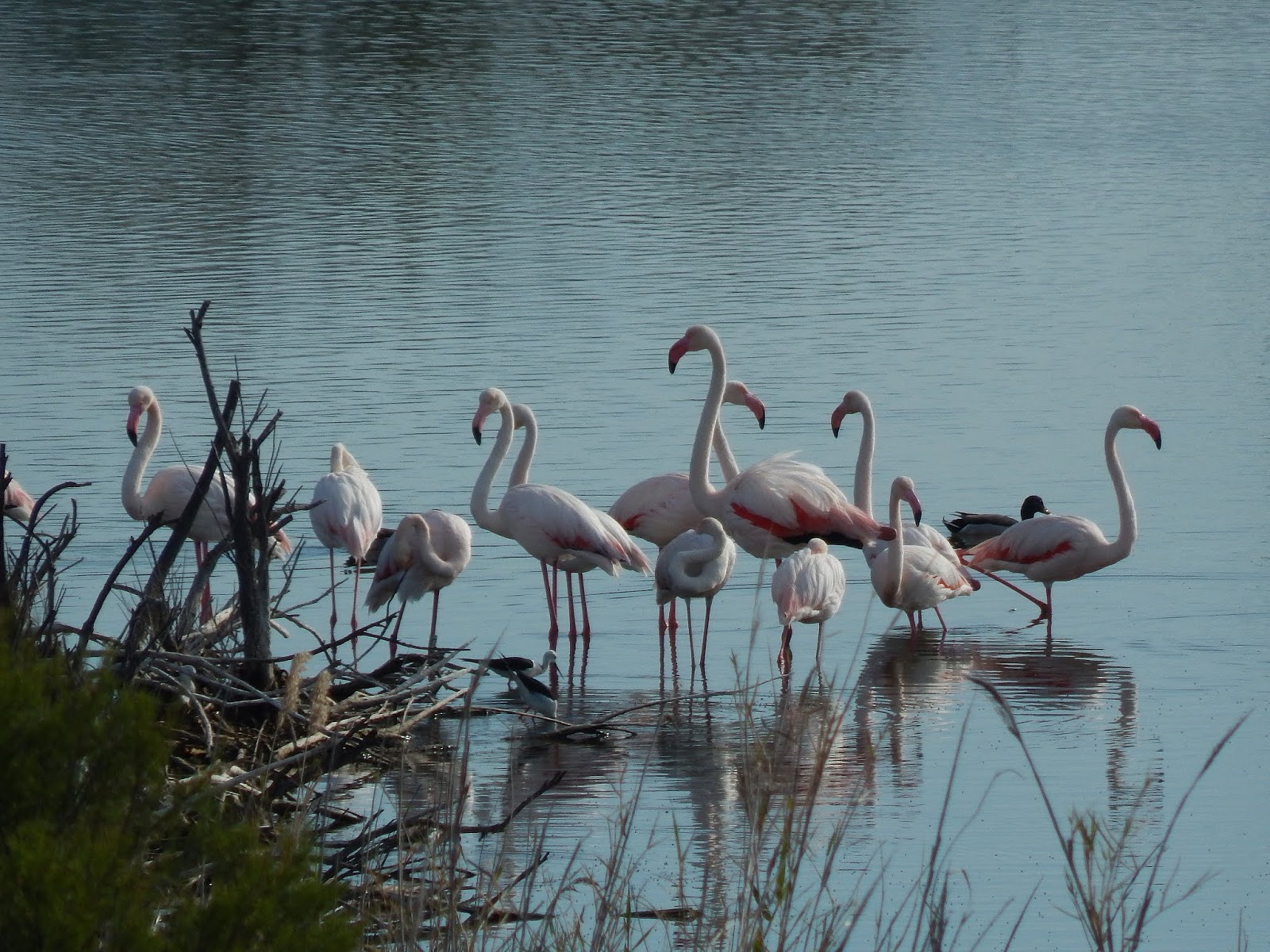
On my first time I saw a couple of immature Greater Flamingoes but this had grown to a total of eighteen by the time of my second as the two young ones were joined by sixteen adults. Other leggy birds included Night Herons and a Squacco Heron. Overall numbers of herons on this trip were low but that represented the only real disappointment this time around.

Curlew Sandpiper, Dunlins and Sanderlings

Spanish birders were looking for an immature Bonaparte's Gull which has been in the area for a bit but they didn't appear to have any joy though other gulls were providing me with entertainment. Before last year I'd never seen Slender-billed here before but this time there were loads of them! At least forty were feeding around the reserve and joined both Black-headeds and Meds in hiding any exotic Americans that may have been with them. Several immature Whiskered Terns were seen flitting over the Laguna Grande but my favourite terns of the trip were two Little Terns that paused briefly in front of the hide before those bothersome stilts intervened again.

Little and Whiskered Terns.

Other biding entertainment was provided by a passing pale phase Booted Eagle and also by my only Woodchat Shrike, I seem to remember them being much commoner than this but perhaps most of them were migrants. A Short-toed Lark showed well if briefly from one of the hides, it was flushed by an enormous lens emerging from one of the flaps like the muzzle of a coast defence gun from a bunker. It and all the other goodies have guaranteed that I will be visiting this marvellous little reserve on any future visits to this bit of Spain.

Slender-billed Gulls and Black-winged Stilt.

Spanish Travels Part Two, El Pinillio

El Pinillio is the name of the station where I get the train to before beginning my strenuous hike up through the pinewoods and on up into the mountains. It can be hard work in all senses but this year turned out to be rather more interesting than in some previous visits.

Bonelli's Warbler and Little Owl.

Having walked up to edge of the town I found myself at the first of the pines where two Hoopoes were feeding beneath. Passing through the tunnel under the motorway brought me into the woods proper and resulted in the sighting of a pair of Long-tailed Tits. These are pretty scarce around here or at least have been in the past but today I saw several other pairs. Today was in fact something of a tit fest as I also caught up with Coal, Crested and Great. This trip was also far better for Bonelli's Warblers than usual, most years I don't see any whatsoever but this time around I saw them in three different locations. I watched at least two feeding amongst the pines but couldn't say if they were migrants or resident. At least two separate Turtle Doves were displaying, so good to see them doing well. The dominant bird son in the woods is Chaffinch though the rattling song of Sardinian Warblers runs them close.

Thekla Lark and Stonechat.

Leaving the woods behind and entering into more open country brought a different selection of  birds to enjoy. A pair of Thekla Larks showed well while Linnets proved to be common, they seem to prefer higher levels here in Summer at least. Continuing on and I flushed a Little Owl which flew into a rock crevice and glared at me from within. Higher up I found a pair of Black Wheatears evidently nesting in a rock fissure, I didn't want to disturb them so there are no photos this time around. I reached the summit of the closest (and smallest!) mountain before turning around as it was beginning to get a little on the warm side.

Crossbill and Greenfinch.

Retracing my steps brought me back under the road and also to several Crossbills which were feeding on the buds of a deciduous tree on the edge of town. Even reaching the train station did not bring an end to the interesting sightings as I enjoyed watching a few Red-rumped Swallows collecting mud for their nests before my train arrived.

Red-rumped Swallows.

Spanish Travels 25/ 4 - 3/5/19. Fuengirola and Torremuelle.

Just returned from a visit to Spain (very early this morning) where although it wasn't a wildlife watching sort of affair I did manage to catch up with some of the local beasties. I'm going to break up the reports into little segments as I usually do just to make it a little more manageable.

Turtle Dove and Sardinian Warbler.

My wife and I stayed in a hotel in Torremuelle, a suburb of Benalmadena which is, like much of Spain, over developed but with just enough green left to make it interesting. While the sound of chirping sparrows (House) or cooing of Collared Doves made up most of the local dawn chorus a few other voices could be heard from around our hotel. Best of these were several Turtle Doves which seemed to have set up territories in a neighbouring green site. I was pleased to see them here and in several other spots given how rare they've become here in recent years. Other local birds included Sardinian Warblers, Red-rumped Swallows and on one morning a singing Bonelli's Warbler.

Common but attractive, Swallow and Serin.

Further explorations in the area a little further from our accommodation resulted in sightings of several Melodious Warblers, one of which was not remotely shy as it sang from the top of a bush. Amongst the other highlights was a flypast from a dark phase Booted Eagle which annoyed the local Kestrels and many Bee-eaters.

Little Ringed Plover and Little Egret.

On several trips over to Fuengirola I spent a little time walking up the rapidly drying rio of the same name. The poplars around here always seem to be popular with Isabelline Warblers and I heard several and even managed a half decent photo. Nightingales are common here too while both Blackcaps and Reed Warblers as well as a few Cetti's joined in with the chorus. The rio proved to be attractive to two or three Little Ringed Plovers and at least one Little Egret but not that much else.

Singing hippos, Melodious and Isabelline Warblers.

One feature of these southern Spanish towns is the number of swifts that make them their homes and Fuengirola in particular seem to have good numbers of both Common and Pallid, their noisy evening flypasts providing one of the more memorable spectacles.

Nightingale.

Tuesday, 23 April 2019

Pleasant Surprise.

When work gave me the opportunity to take a half day off and savour the last of the fine weather I jumped at the chance. Having enjoyed the song of a Blackcap from my garden and seen a Peacock butterfly too I was ready to get ready and grab the bus down to Weldon.

Banded Demoiselle.

A walk alongside the stream produced a sighting of a female Banded Demoiselle, I'd been hoping to find one but didn't really expect to. After all this record was about a fortnight earlier than in any previous years and was no doubt due to the exceptionally good weather that we've had over Easter. Having taken several photographs I left her to herself and walked on. I then bumped into the county dragonfly recorder Mark Tyrrell who set off to look for my demoiselle.

Large Red Damselfly.

Carrying on along to the pond at the Woodland Park I walked along its edge hoping to see some Large Red Damselflies. Pleasingly I managed to find three though I had to rescue one from a spider's web. While I'd normally leave nature to do its thing I thought differently today and decided to save it from becoming a spider snack. After several minutes the damsel seemed to have cleared herself of web and flew off. Returning to the stream I saw that Mark had managed to catch up with the demoiselle before he had to scoot off back to work. Minutes later I found to my further surprise a male Banded Demoiselle though this one unlike the female did not pause for pics and chose instead to flit over the stream and into someone's garden.

Holly Blue and Peacock.

From here I wandered along to the A43 pond where at least twelve Tufted Ducks were still hanging around. I was able to find a few butterflies and my total list for Weldon was Comma 1, Peacock 1, Brimstone 2, Speckled Wood 3, Holly Blue 4 and a few Orange-tips. On the way home from Weldon I popped in briefly to my old patch near to Corby STW where butterflies were the order of the day with two Small Tortoiseshells, a Comma, four Speckled Woods, two Peacocks and an Orange-tip making up the numbers. Sorry for boring you with the figures but these posts also serve as my notes! Not a great deal else to report though a Whitethroat was singing near to the entrance.

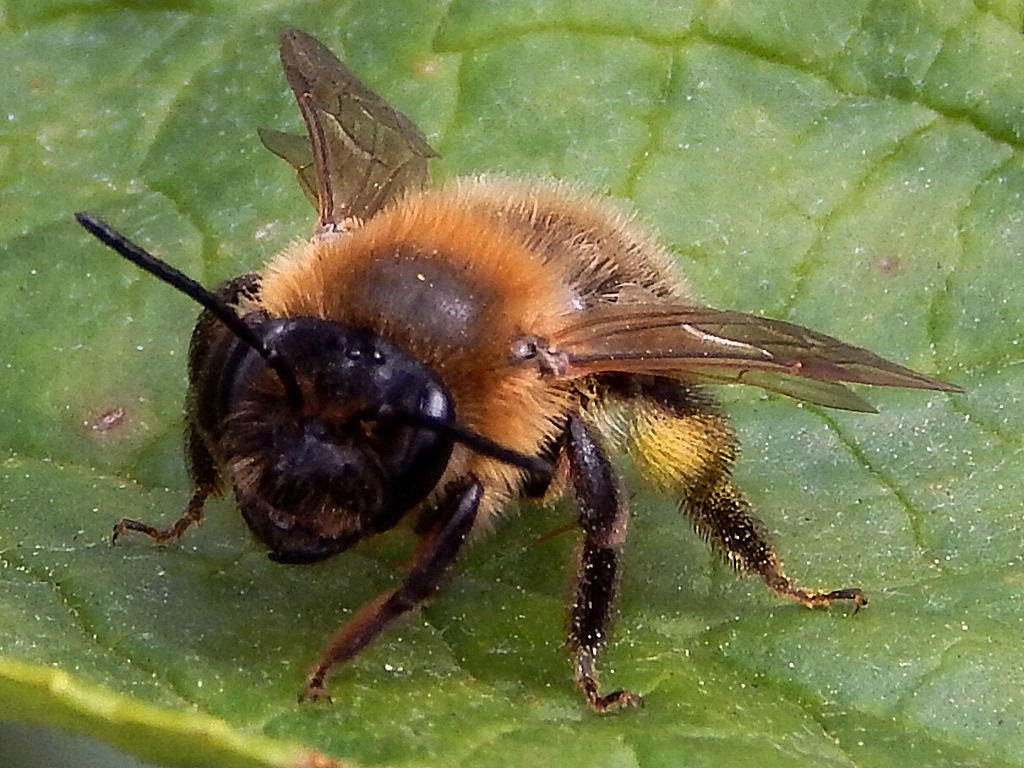
Bee and bee-fly.

Monday, 22 April 2019

Thrapston Swansong

Today was the last day of my Easter break (boo!) and I spent much of the day with Alan Shorrock taking a walk around the Titchmarsh reserve near Thrapston. We enjoyed a cracking walk in good conditions and managed to find some interesting birds.

Titchmarsh NR

My second Great White Egret in as many days was seen on Aldwincle lake soon after our arrival though this one's beak was still yellow unlike yesterday's. There were plenty of warblers in song on the reserve and these included Cetti's as well as my first Garden Warblers of the Spring. I also saw my first Cuckoos of the year with two males having something of a territorial tiff. For the second day running I failed to catch up with any hirundines, I wonder where they are?

Great White Egret and Song Thrush.

Another migrant that did perform was Nightingale, we saw one and heard another close to the iron bridge between Town Lake and Elinor. I did manage a record shot of sorts but it's a bit of a duffer truth be told. We listened to this declining visitor's marvellous song for quite a while, with the seeming loss of the Glapthorn birds this could become a hard species to see in the county.

Nightingale and Whooper Swan

Elinor trout lake paid host to the long staying Whooper Swan which I'd managed to miss so far but which was far more obliging today. Its bill has now coloured up nicely and the bird looks almost adult. You don't often get to enjoy Whooper Swans whilst wearing a T-shirt so it was a pleasant change. There were not too many other interesting birds about though a few butterflies were seen and these were Speckled Wood (4), Peacock (3), Comma (1), Small Tortoiseshell (2), Brimstone (8/9) and rather a lot of Orange-tips. In addition to these a Holly Blue was noted when we stopped for a pint in Brigstock.

Speckled Wood and Comma.

Sunday, 21 April 2019

County Travels

My brother and I did a bit of a county tour today as we checked out some of the better birding sites in Northants. We began just before sunrise at Kingswood in Corby where we found a selection of the commoner species including Stock Dove. After about an hour it was time to move on and we made our way over to Stanwick Lakes.

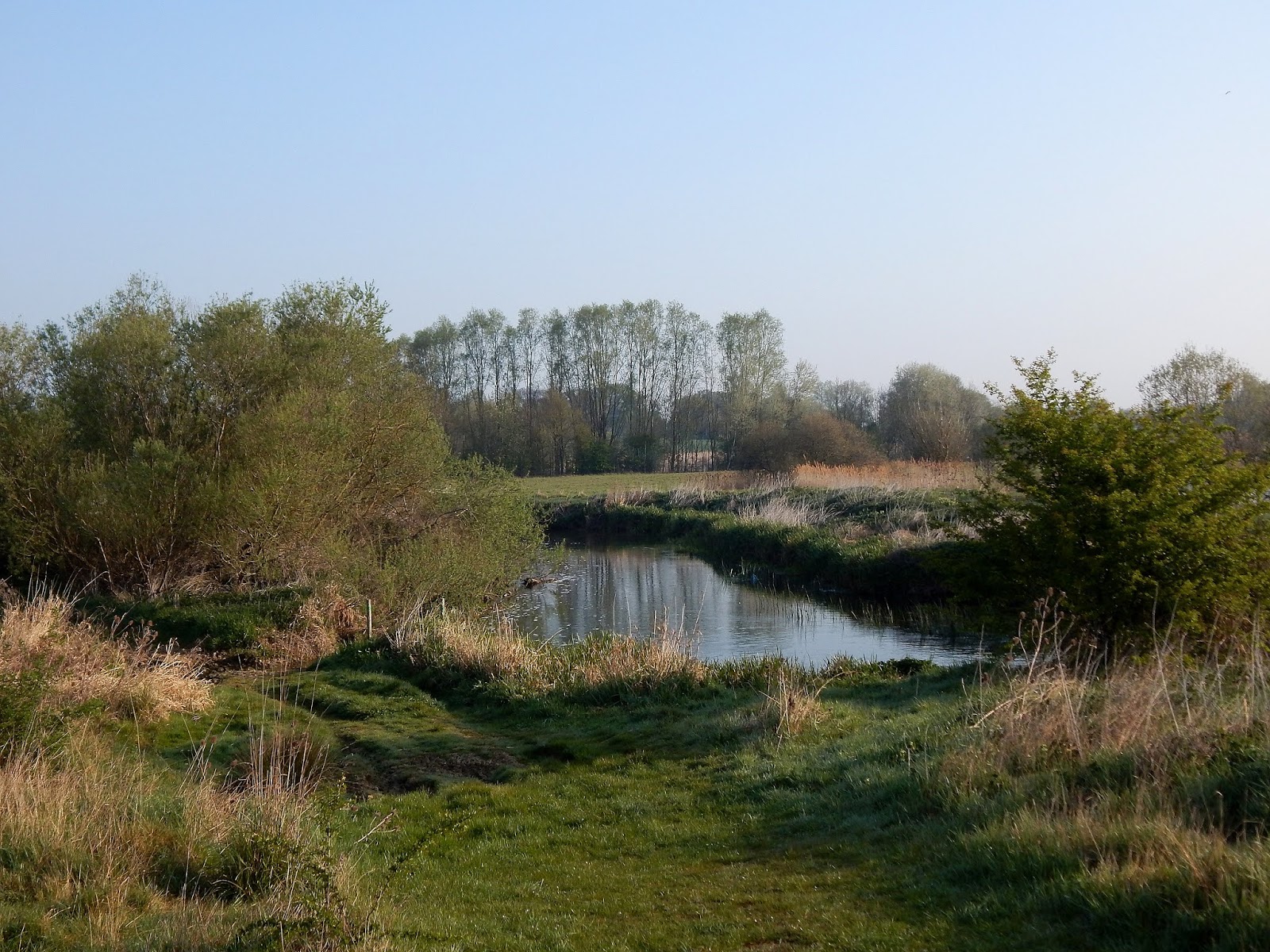
Kingswood views.

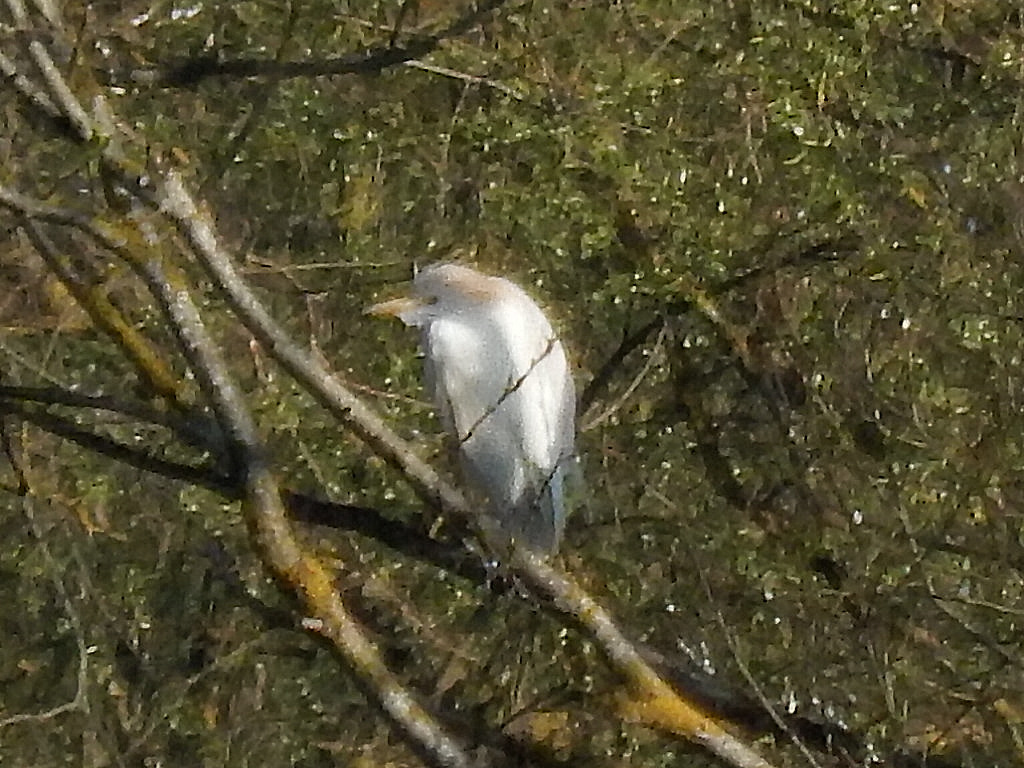
Stanwick was a bit on the misty side when we first arrived though it did not take long for conditions to improve. Our main goal was try and catch up with our first Northants Cattle Egret, we've made a few attempts in the past but with no joy whatsoever. Today luck was on our side however as we found the reported bird preening in a tree close to some cattle. Although the bird was quite distant we were happy just to have finally caught up with this species. Herons were well represented today with Great White and Little Egret as well as Grey Heron joining their scarcer cousin on the day's list. There were plenty of Reed Warblers singing around the site but no hirundines at all. Worryingly we didn't see any at Summer Leys either, hopefully it was just bad luck on our part and not a sign of a major decline. A single Muntjac was the only other wildlife noted here this morning.

Stanwick.

Moving on along the Nene Valley took us to Summer Leys where we hoped to catch up with the long staying drake Garganey. While the bird was indeed reported today we were unable to find it, I suppose you can't expect to win them all! More warblers were heard around the reserve with at least four Lesser Whitethroats and a few Sedges as well as those species that were already well established. Not many waders were on view with a few Redshanks and a couple of Little Ringed Plovers being the only ones apart from Lapwing. With the sun burning rather hot by now it was no surprise to see some butterflies, Orange-tips were the commonest but at least ten Brimstones were noted too and these included several egg laying females. Several Speckled Woods were also found but I couldn't find any damselflies today despite having a look.

Egret trio.

Reports of two Avocets at Irthlingborough were enough to persuade us to give it a try. We were fortunate enough to catch up with them and had some distant and heat hazy views of this scarce county visitor. From here we moved on to our final stop at Harrington airfield where we saw a selection of common farmland birds including several Whitethroats. A few more butterflies were also added to the list with three Small Tortoiseshells and a Peacock being noted. Satisfied with our day's wildlife spotting we headed back towards home where I treated myself to a cold beer - cheers!

Some of today's wildlife